Sunday, February 17, 2008

Thoughts on hosting conference

By Adrian Windish

For the last few days I've been busy working at front of house at the Green Party Conference. Over the last 4 years I've been to 7 conferences abound the country, and its a wonderful experience to welcome the many people I've met to Reading. Its feels such so strange seeing so many of the most important Greens in the country come to my home town.

And I'm so proud of my local party. We have stepped up campaigning in the last few months in preparation for the local elections in May when we think Rob White, our target candidate, will get elected. Rob opened the conference with a speech, raising our profile within the Green Party
even more. We have letters and articles in the paper every couple of weeks from a growing group of people, and Robs regular column; Whites Trash.

I'm also proud at how well Reading Green Party are coping with its front of house duties. Its not unlike election day, we have a rota and people take turns being at the desk and attending the conference upstairs. The last conferences I've been to the local parties have seemed to need help
to do this. On election day we have a similar rota for being outside the polling stations. When I joined the party in the spring of 2004 we had only a handful of active members, we couldn't find enough people to stand as candidates. Now we have built up a team of people that enjoy standing, giving people a chance to vote green. Events like elections and the conference help us also by encouraging lots of people to get more involved, I've met local members today I've not seen before.

Being at conference is to be amongst a hothouse of green ideas, many of them quite radical. It really brings it home to members, many of whom come from small local parties like Reading, how different it is to be in the company of hundreds of dedicated Greens. It also brings into
contrast the other parties, they are just grey shadows by comparison, deciding policy by focus group and all chasing the same voters. The Greens are the only ones to discuss and decide policy in such a public way, we aren't afraid of what the voters might think.

www.greenreading.blogspot.com
www.readinggreenparty.org.uk

Photos and report from Bell fringe


[The last 36 hours have been a whirl, and I've had no time to post... So, catching up a bit:]
Here is a pic of me chairing the Martin Bell fringe that was trailed below and that took place on Friday. I was really happy with how it went.
Some highlights: Bell argued that our Party should be anti-war and pro-peace but also pro-soldier, and that this was the way we could come off well and win on this issue, and not alienate those whose lives we were (amongst others) trying to save; he mentioned the 'remarkable' fact that all 165 Murdoch newspaper editors 'independently' decided to back the Iraq war...;
He called upon the Green Party to cast itself as "the Party of honest politics", and suggested that this was a very plausible string to our bow beside our 'core' issues; he said (drawing upon his experience of having fought the Eastern Region Euro-elections last time -- this is the Region where I am now our Party's lead candidate) "Rupert has a very good chance of winning in 2009; You are a mainstream Party now and deserve such breakthroughs; I wish you every good luck."
Wow! You can't get much closer to an endorsement than that...
The meeting was very well-attended indeed and we had a good debate over the issues; Natalie Bennett (also pictured above) spoke well in responding to Martin; and we had a good lunch together afterward, attended also by our three target Westminster candidates (Caroline, Adrian and Darren), during which Martin gave them (and in particular, Caroline) a number of hot tips on how to operate effectively as a loner in the House of Commons!
Exciting times...
[p.s. For more images from Conference, goto http://www.thisisull.com/politics/309770232_mogreenconference15feb08gallery.html ]

Lighter moments

Best line of the Green Party conference:
“You just can’t keep elections up all day.”

A prize for the latest emergency motion:
“As the Evening Standard reported in 208.”
(Just catching up with the Romans...)

Best apology of the conference:
"I can't provide a detailed workshop report because I picked up the wrong piece of paper - a bar bill instead of my notes."

Saturday, February 16, 2008

Mark Steel wows Green Left fringe

Campaign Against Censorship: for press freedom fringe

Tim Gopsill led off the session. He's a member of the NUJ executive and co-chair of the Campaign for Press and Broadcasting Freedom.

Beginning his speech well he pointed out that whilst it might be the case in China the main source of censorship in the UK (and US) was not the government but the big businesses that actually own the media. It was less a case of the government interference in the press as media interference in democracy.

In fact there was living proof on the platform in the shape of Mark Steel who'd been sacked for his political views from the Guardian, although luckily for us he'd been able to get work at the Independent instead, continuing his excellent weekly column.

Having said that he then went into gory detail as to how the government had brought the BBC to heel over the Hutton report, suppressing its ability to pursue high quality journalism and cowing it into little more than a propaganda outfit for the government. I even laughed out loud when he said “It's a disgrace... even Campbell doesn't slag them off any more.”

Tim's main concern was around the undermining of “high quality journalism” and the ability of big business to provide a free and fair media – he argued it simply “can't be left to the free market.”

Tim was good but I'm guessing most people there had come to see Mark Steel who was on top form. He immediately launched into his story about how Johnny Ball, much loved kids TV presenter from the old days, had once grabbed him in a vice like grip and told him that carbon emissions were down to spiders. For a change it isn't the left who are the crazy ones who people just write off, at last it is the right, in this case climate change deniers, that come across as total oddities.

In fact this is true for a whole range of areas, for instance where even traditional conservatives are angry about the privatisation of the rail network system. Steel was at his angriest when discussing transport – I sensed the years of accumulated wasted time in utter discomfort that he'd obviously had to suffer on London's grime ridden public transport.

But when it came to laying blame he was determined not to say the failure to get our views across in the press was all the fault of the right and the owners of the media – that when it comes to getting across our message we have to take this on as our responsibility rather than pretend its always someone else's problem. No easy task at a time when the left is “weaker than it has been for a hundred years”.

He stated the Labour Party couldn't be regarded as socialist by any stretch of the imagination any more and the left inside of the Labour Party was at its weakest it ever had been in historical terms. He named organisations like the Communist Party who, whilst we may have had many major problems with them, it also contained good individuals who'd managed fantastic achievements, and it's effectively no longer on the scene.

He even mentioned that “I was, until very recently, a member of a hard left organisation that just hasn't got anywhere” and that “if you look at the debacle of Respect is it any wonder we haven't been able to attract any more than a handful of peculiar people.”

He said it was a tragedy at a time when the right is on the defensive among the general population that the left had been unable to tap into this in the way it could have. “All organisations need to get together and discuss, without slagging each other off,” about how to present an effective united movement that doesn't allow Tesco to pose as green because it has a new eco-logo.

I don't know if this is a first, but a non-Green Party member got a standing ovation. Thanks to the Green Left for organising such an energising event.

Polyclinics and The Green Party

From 5pm to 7pm today, in the Main Hall, there was a Policy Fair (30 minutes sitting as part of a group with a policy specialist, whistle blows, move to next table, insert speed dating joke here).

I attended from 6pm to 630pm, and I had Stuart Jeffrey, the health policy fellow, all to myself.

After some chit chat about physios at Queen Elizabeth Hospital in Toronto, I picked his brain on polyclinics.

Lord Darzi's vision is chained to the idea of privatisation (US health corporations being invited in) and the continuation of the internal market of the NHS. His 25-doctor polyclinics would be for every 50 000 citizens.

We favour polyclinics as "an additional layer of care, rather than as a centralisation of services." They would be publically-run, under local control.

I firmly believe that we need to tackle things like blood services (try saying phlebotomy 3 times in a row after 3 pints), mental health, sexual health, and physiotherapy at the community level.

At, say, 20 000 citizens per Green Party polyclinic, that would be 18 polyclinics as an "additional layer of care" in a city the size of Coventry or Leicester, 60 in a city the size of Brum. Other services (e.g. out of hours casts for broken arms) might be at a level of 40 000 citizens, and in an average city of 250 000 people, we'd have a district hospital with all the operating theatres and CAT scanners.

A progressive abortion policy

Declaring an interest at the beginning, I was the mover of the motion, which I'm pleased to say was overwhelming passed, to back three important reforms to the existing law on abortion.

Green Party policy was already pretty solid, saying the party would not back any change in the law to reduce women's access to abortion, but it now also backs three changes to recognise medical developments and social changes: to remove the requirement to obtain two doctors' signatures, to allow nurses and midwives to perform abortions, and to loosen restrictions on where abortions can be performed.

The BBC reported the policy change.

So is the Green Party anti-capitalist?

In short – no – that was the conclusion of a fascinating fringe held yesterday, as nearly 100 people crammed into a windowless basement dressing room, with mirrored walls and weirdly glowing makeup lights. The setting was psychedelic, but the debate was sober and considered.

Jim Jepps, organiser of this blog, was the chair and organiser, and he’d organised two speakers from different perspectives.

First up was Matt Sellwood, city councillor from Oxford

His answer to the topic statement could I think have been fairly classed as a qualified “yes”. He said: “I don’t mean should change fundamentally at the moment. I am an anti-capitalist in a sensible way. I don’t tend to talk about the need for a worker’s dreadnought. We need to be smart about way we get there. Michael Albert talks about non-reformist reforms, open sphere community power, people power, to make it easier to get to the society we want.”

Matt stressed that he was not saying “we won’t do anything until capitalism has been abolished”. We have to know that the end of capitalism it is the end of the line and if don’t get there aren’t going to solve environmental and abolishing poverty. That was because capitalism was fundamentally dependent on growth, and growth is not what sustains environment.

“Sometimes think because we are Greens everything will be nice – it will all happen.”

Darren Johnson, GLA and Lewisham, spoke next.

He said he thought that everyone in the room accepted that the current economic model was unsustainable -- the neoliberal economic agenda, the globalised economy, the power of big business, disparities in wealth, overriding emphasis on growth. “But the labels capitalism/anti are unhelpful.”

What Greens wanted as a healthy mixed economy. “We believe in a much stronger role for the public sector, protecting public services, making sure natural monopolies such as rail and water in public hands and see a much bigger role for the third sector, for smaller not-for-profit enterprises, co-operatives etc. We also do though see a role for private enterprise – want better regulated, more localised, economic welfare and happiness as dominant drivers of policy.

Discussion was wide-ranging, a selection:

• Capitalism is just a four-letter word. If a little bloke gets £5K redundancy and invests in fish van, does quite well, that’s one thing, enormous multinational another – we need more words. We need a regulated economy, mixed economy. The problem is consumerism has been the dominant, since 17th century at least.

• Beware of romanticising small business – are often the people who most brutally antiunion, brutally antisustainability, something that might arise from competition.

• What needs to be tackled are the rights that capital has gathered over 100 or more years: right to limited liability, privacy, rights to legal personhood.

• The party to be inclusive as possible needs to approach people like shareholders – in sorrow rather than in anger – we want these people to vote Green even though we are pooping in their party.

• A major cultural shift needs to be made to see producers competing on quality rather than price – as did medieval guilds

• A potential slogan – what we want are are quality services, quality of goods, quality of life.

Derek Wall: key note speech

Fresh from his eco-socialism fringe last night this morning it was Derek's turn to make his keynote speech as Male Principal Speaker.

He started with the economics. The worrying fact is that all the signs point towards the possibility of a recession and our system simply does not have the mechanisms to dig us out of the whole. Take Northern Rock who've recieved more government money than any private company in history from the British government and how, via the esoteric financial web that is woven across the globe its connected to weird and dodgy mortgages in Florida - that somehow we have ended up propping up.

Or take how a single trader was able to "lose" billions of pounds all in one go - could he have simply given it away to pay off all the credit card debts?

Derek compared capitalism to a drug addiction, where the solution to the pain today was to feed the addiction, getting us into deeper debt, building our house on sand. It may give us some temporary release but there will come a day when there simply is nothing that can be done. Their solutions are more privatisation, more free market globalisation and to make the interests of the city pre-eminent. That is not a solution to the current financial situation.

I include what he next said in the hope that someone might be able to clarify what on Earth he meant - I'm sure it's true (probably) - but it threw me, coming in the midst of some rather sensible remarks. "Every time you eat margarine you risk killing a monkey." Ummm.... do I? It has a ring to it and I'm considering adopting it as my unofficial slogan (you knowe printing it up on T-shirts and badges) but I should really seek clarification first. Anyway, that's an aside.

Derek rightly said that this increase spiral is increasingly no fun at all. Where is the push to have decently funded, ecologically friendly council homes? Why are we letting the arms industry constantly test its products out on live human beings?

Derek raised Venezuela and said that there they are trying to create a model where people control the economy. We need to be doing the same here, creating green plans for "people orientated production". It's no use doing what Thatcher did, making us "technically richer whilst simultaneously making us socially poorer."

In concluding Dr Derek Wall weild out a very big word. Socialism. In explaining what his socialism was about he said that we needed to shift a world that was there simply for the benefit of the super rich but not in the direction of centralised state planning but in human centred localised democracy. We have to tackle property rights which are the "long DNA of the system".

That means we need to work with the trade unions, with direct actionists like at climate camp and all those who want a real change in the way we organise society.

(Thoughts on Derek's 2007 keynote speech)

Friday, February 15, 2008

Free software and data

Guestr despatch by Tom Chance

My fringe session on free software and data went well last night, we discussed the issues, possible policy and campaigns on what is a pretty niche subject. My cause was helped by the organisers using OpenStreetMap's coverage in the conference pack to show people how to get around - a nice treat for me since I helped map this area!

I started out by describing why Greens should care about "intellectual property", touching on the potential for free information to empower communities, taking control from centralising corporations to promote small and medium-scale social enterprise and exploring/defending/deepening alternative property forms such as the commons; also classical environmental concerns like the availability of data and research on climate change, e-waste created by Microsoft Vista's upgrade cycle, and so on.

I then introduced some context, namely:

Participants fleshed out various ways of looking at the problems, including: open access scientific journals, and the comparative cost of open access versus paid access models; the quality of data available; the formats and standards in which data is made available; legal and technical restrictions on data; working cultures that lead to these problems and a general culture of excessive centralisation & restriction. So quite comprehensive!

Two nice practical ideas came out, which was a relief...

First, access to electoral data including boundaries (wards, constituencies, etc.), election results (that vary in format and quality across council web sites) and the postcode database. In Brighton, Jason Kitkat wanted to set-up a "who is your councillor" web page but couldn't because of the post codeissue. We could talk to people like ORG, mySociety, the British Computer Society, OKFN and others to represent this issue to the Electoral Commission. A bit dorky, perhaps, but maybe an easy win?

The second is to see if we can convince someone in a council that we have some political power in - i.e. Brighton, Lewisham, Norwich or Oxford - to assist OpenStreetMap more directly. For example they could notify OSM volunteers when streets, amenities etc. are created or change.

I'm hoping to turn a list of email addresses into a working group, with a view to submitting a policy motion in the Autumn conference and developing those campaigns in the meantime. Fingers crossed, stay posted.

My day out in Reading...

I feel like a bit of a dilletante at this Spring Conference - I've already been and gone, despite only living in Oxford! A lot was crammed into one short Friday, however - and what struck me most was the importance of the casual, short conversations in corridors and in between workshops. Increasingly, such 'catch up' meetings between Greens who otherwise work at seperate ends of the country seem to be the most important of Conference for me. For example, through such quickfire conversations I learnt what was going on in Norwich, Brighton, Lewisham, York and Swansea amongst other places - not to mention all the gossip on what had happened on Thursday!

Of course, I did also manage to do some of the 'official' conference business. Despite being a lazy sod, I managed to arrive in time for the keynote speeches by Sian Berry and Caroline Lucas. As has already been pointed out on this blog, there is no doubt that the campaign trail has honed Sian's speaking skills to an impressive level - and Caroline is always excellent. For me, the most intriguing part of Caroline's speech was her repeated condemnation of 'modern consumer capitalism'...but perhaps that is because my mind was already on the debate on anti-capitalism that I was scheduled to be taking part in later on...

After the keynote speeches, Conference got down to what it does best - arguing over policy in (often excruciating) detail. I wouldn't swap the extraordinarily impressive internal democracy of the Party for anything, but there were occasions during the more irrelevant contributions in plenary that I would have loved to be in control of the mike.....

Despite all that, though, we got through an impressive amount in one day - among other things, we passed a progressive policy on abortion, supported the boycott on Israel, passed an entirely new and updated energy policy, and even managed to improve all of these things through reasoned debate - something that is a dim and distant memory at the other Party conferences. I was particularly glad to be able to contribute to the shelving of a proposal for the Party to support the proposal for a massive solar power 'farm' in North Africa - something that I think needs to be MUCH better defined if we are to avoid it becoming simply another large, colonial grab of resources.

In between all of this plenary action, I managed to get to a detailed talk by the Electoral Commmission 'Enforcement Manager' (oo err) about donations and financial reporting for elections....mostly full of Party members coming up with increasingly bizarre examples of what might happen and how it might be reported ('what do we do if a Russian billionaire donates to us?' and 'when exactly does an underwriting guarantee become a loan for the purposes of reporting' were amongst the more thrilling discussions). And then, after some quick refreshment I went along to the fringe on 'Is the Green Party Anti-Capitalist?' organised by Jim Jepps, who also organised this blog. Busy man.

Lucky I went along to the fringe really, cos I was helping to 'frame the debate' along with Cllr Darren Johnson AM from Lewisham. And very interesting it was too, though rather frustrating for me, as ten minutes isn't really enough time to explain capitalism, why it is unsustainable, what anti-capitalism might look like, and how we might get there. In the best tradition of the Green Party though, what might in other organisations (particularly the far-left) have turned into a massive bunfight, was actually interesting, respectful and thought-provoking. Everyone in the room (probably about forty or fifty people, I guess) ended up reaffirming just how much unites us - a desire to restrain and ultimately break the power of multinational corporations, an agreement that a 'mixed economy' in which the private sector serves the people and not the other way around is important (though some of us would like to use that as a staging point for more radical change) and a complete opposition to the dogma of neoliberal economics. We also all agree, I think that the terms 'capitalism' and 'anti-capitalism' are alienating for the general public, and that we want to present a positive, forward looking agenda for change.

While I believe that change needs to go further than Darren does, I really enjoy being in a Party where a radical social democrat and near anarcho-communist can have a respectful discussion and end up having a drink in the bar!

It's certainly made me determined to write something in time for next Conference, going into more detail about just why I believe that capitalism needs to be abolished, not just restrained....

Matt

P.S. Those interested in further exploring capitalism and alternatives could do much worse than to visit www.zmag.org - in particular, a good short rant on capitalism here: http://www.zcommunications.org/zparecon/qacapitalism.htm

Deputy Young Mayor of Lewisham visits Green Party Conference

Aargh! I said I would blog conference, but if you sit down and blog you miss something and it looks terribly anti-social to do as I'm currently doing and sit with a laptop in the bar. So I'll be very brief. Got to conference much later than intended, as I had a load of Council stuff to finish off, so missed most of Thursday. Busy day today though - excellent speeches from Caroline and Sian, as already posted by Jim.

This afternoon I attended a fringe with Naz Ramadan, the current Deputy Young Mayor of Lewisham, Luziane Tchiegue-Nouta, the former Deputy Young Mayor of Lewisham, Jean Lambert (Green MEP for London), and Darren Johnson (Lewisham Councillor and London Assembly member). Lewisham was the first Council to set up a Young Mayor scheme - the post is fiercely contested, anyone under the age of 18 in the borough can vote in the election and this year had a higher turnout than in the local elections. The Young Mayor has a team of young advisers and they also have a budget to spend each year. The scheme is since being rolled out elsewhere in the country. Really pleased that they came along to Green Party Conference to discuss their role, having been to the other party conferences in the Autumn. More details here.

This evening I spoke at a Young Greens fringe on 'Young Greens Engagement with local parties'. This is something we're still working at in Lewisham, but after a number of abortive attempts, we do have a functioning Young Greens group at Goldsmiths College, and the current president of Goldsmiths College Students' Union is a Green Party member.
Now I'm off for a meal with the Association of Green Councillors. Will try to post something more coherent tomorrow.

End Of Day One

First off, if you haven't read it today, read this.


[...] the disorientation that comes from passing through the biggest political rupture in living memory - a matter not just of the disastrous invasion, but the deceit that surrounded it - and beholding a political elite that still wants to keep the public's sustained disquiet at arm's length
That out of the way, Reading (I like a good city wall) and Reading Town Hall is a great venue for conference. I've fallen in love with the Main Hall (powder blue-and-white walls, with seven chandeliers and a heckuva-big pipe organ), and I can recommend the veggie korma in the cafe.

The first day of conference for me was:

- arriving late during the abortion debate (thankfully passed -- how can man after man stand up and speak against this part of the motion or that part, when the motion won't affect them, and it affects 1 in 3 women in Britain during their lifetime?);
- the fringe meeting with Martin Bell on integrity in public life (I didn't know he had been a media advisor to Reg Keys in Sedgefield in 2005);
- a panel of speakers from the Niger Delta, Palestine, and Venezuela;
- an interesting debate on concentrated solar power (should it be used for Europe's benefit -- undersea cabling -- or African development explicitly coming first) as part of the Energy Voting Paper;
- a fringe on how to encourage Young Greens into the party; and to finish off,
- Jim's fringe on "Is The Green Party Anti-Capitalist?"

I always come away from conference thinking I've been a bit too quiet, and with more questions than answers:

- On Young Greens (how do we encourage all the folks who don't go on to university, but are 22, 24, 26, into the party, if we focus on setting up university chapters?)

- On the Energy Voting Paper debate (if nigh on half of the country's local councillors are Tory, and we have the 3rd lowest level of installed renewables in the EU, how is David Cameron credible on the environment -- all his local mates are blocking renewables at the planning stage!)

- On the Greens being anti-capitalist (well, we'd say that we prefer a mixed economy, but then we talk about nationalising public transport, and since we have a more red-blooded form of capitalism in Britain -- where New Labour brings in PPP-a-go-go and even a minimum wage is trumpeted as a grand achievement -- nationalisation will be viewed as anti-capitalist by the man in the street). I always think of the Green Party as having its policies centred on ecology, on endless consumption of finite resources being the problem, as opposed to linked in the final moment to capitalism (Tories, Labour, Lib Dems) or socialism (Respect, the Socialist Party, the IWCA).

Caroline Lucas: key note speech

Caroline Lucas made her key note speech this morning in her capacity as Female Principal Speaker. Once again she made a real barnstormer (My thoughts on Caroline's key note speech in 2006) - she even received a standing ovation, which is by no means usual, Green Party members being agreeably grumpy most of the time.

Caroline spoke directly after Sian Berry (the Green London Mayoral candidate) who gave an excellent, short speech about her campaign. I've noticed she's become much sharper over the couple of years since I first came across her. Her speaking voice is more confident and her manner has become more refined, obviously the campaign trail has done her good. I'm hoping to catch a few moments with her over the next couple of days so there may be an interview in the offing.

Caroline started her speech on the topic of non-violent direct action and the willingness of those in the movement to throw themselves into the gears risking physical harm and arrest for what they believe in. She of course has a bit of a history in this area herself, although her focus was on examples from round the country of those who'd been willing to come into (non-violent) confrontation with the law.

She denounced the idea of "politics without purpose", the politics of the three mainstream parties whose goals and principles simply revolve around keeping power. This self perpetuating governing class who can change their "core policies" simply according to how they think they need to appear.

Obviously she talked about the environment, nuclear power and nuclear weapons. she also referenced the great anti-war march whose fifth anniversary is coming up where it was demonstrated just how unable the people of this country are to influence the direction of government.

After discussing the need for a "green energy revolution" she asked who was capable of carrying this through. The so called opposition parties, whose policies change with the political winds? Everywhere there have been Greens elected to political position we have been able to affect real change - and if the "opposition" parties wont do it - then they should get out of the way and let the alternatives get on with the job!

How are any of the main three "grey" parties going to deal with the triple threat of climate change, peak oil and global economic recession? Free trade, the free market simply will not cut it when dealing with thresre fundamental issues that we will all have to face.

When raising bio-fuels she said that "it's an obscenity to prioritise food to feed our cars over food to feed the hungry." We need to begin to "live lightly" organising society and our personal lives in such a way that we can eliminate the need for the heavy load of carbon emisions we currently produce.

The grey politicians are out of their depth and it's only wth a real, radical alternative can we begin to tackle these global problems that cannot be simply focus grouped and PR'ed away.

Leading from the rear

I have to start this post by explaining that I am not actually in Reading. In fact I am only going to conference for one day this year. The crazy thing is that this is because I am too busy on my computer ('the brain' - as my partner calls it) to spare the time. But then if I were there I wouldn't be blogging. I'd be catching up with my mates - the best thing about conference.

The best thing about the Green Party, well actually the best thing about the Green Party is that we don't believe in a whipping system. Our Manifesto for a Sustainable Society says that what you do in the privacy of your own bedroom is your own business. It is your conscience that should decide the rights or wrong of it - and we apply the same thinking to our approach to policy. What you say and how you vote if you are elected remains your decision. This does not lead to anarchic chaos - as predicted by defenders of the bastion of the party political, but rather a party whose members are expected to act honestly and with integrity, rather than this being the kiss of death to their political careers.

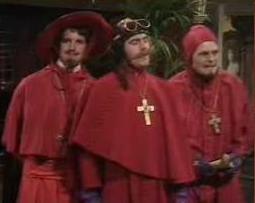
Sorry - I strayed off in a 'Spanish Inquisition' moment there - because what I meant to say is that the best thing about the Green Party is that we have two mutually reinforcing (synergistic even?) basic aims: to devise policies for a peaceful, contented and happy future for all the species alive on the planet and the planet herself, and to use all means, electoral and non-electoral, to put these into effect.

That is why we see Caroline Lucas being carried away from Faslane - because we recognise that elected chambers are only one place, and an increasingly marginalised one, where power resides. If the power is really in the nuclear power-station or the submarine base, that is where we should be. And often the most powerful move is being in the right place at the right time just to tell your truth: Speaking Truth to Power, as the Quakers call it.

So we are all balancing our various activities to try to judge which is the best place to apply pressure at each time and how to do it. For me, this week, that has meant attending a European Elections hustings, aiding a journalist with a story about chickens and knickers, visiting a wood recycling project, and exploring greener routes to work. How much of this is for the green party, part of my paid employment, for my own personal satisfaction is hard to say, just as it is hard for me to say why I'll being going to Reading tomorrow - and harder still to say why I'll be driving.

No: it's not hard. It's about my mates of course! See you soon guys!